A plate roller (also called a plate rolling machine or plate bending machine) is metalworking equipment designed to bend flat metal plates into cylindrical, conical, or curved shapes. These machines apply controlled force through rotating rollers to permanently deform metal without cracking, tearing, or compromising material integrity. From 12-meter wind tower sections to pressure vessel shells, plate rollers handle the heavy forming work that welding and assembly lines depend on.
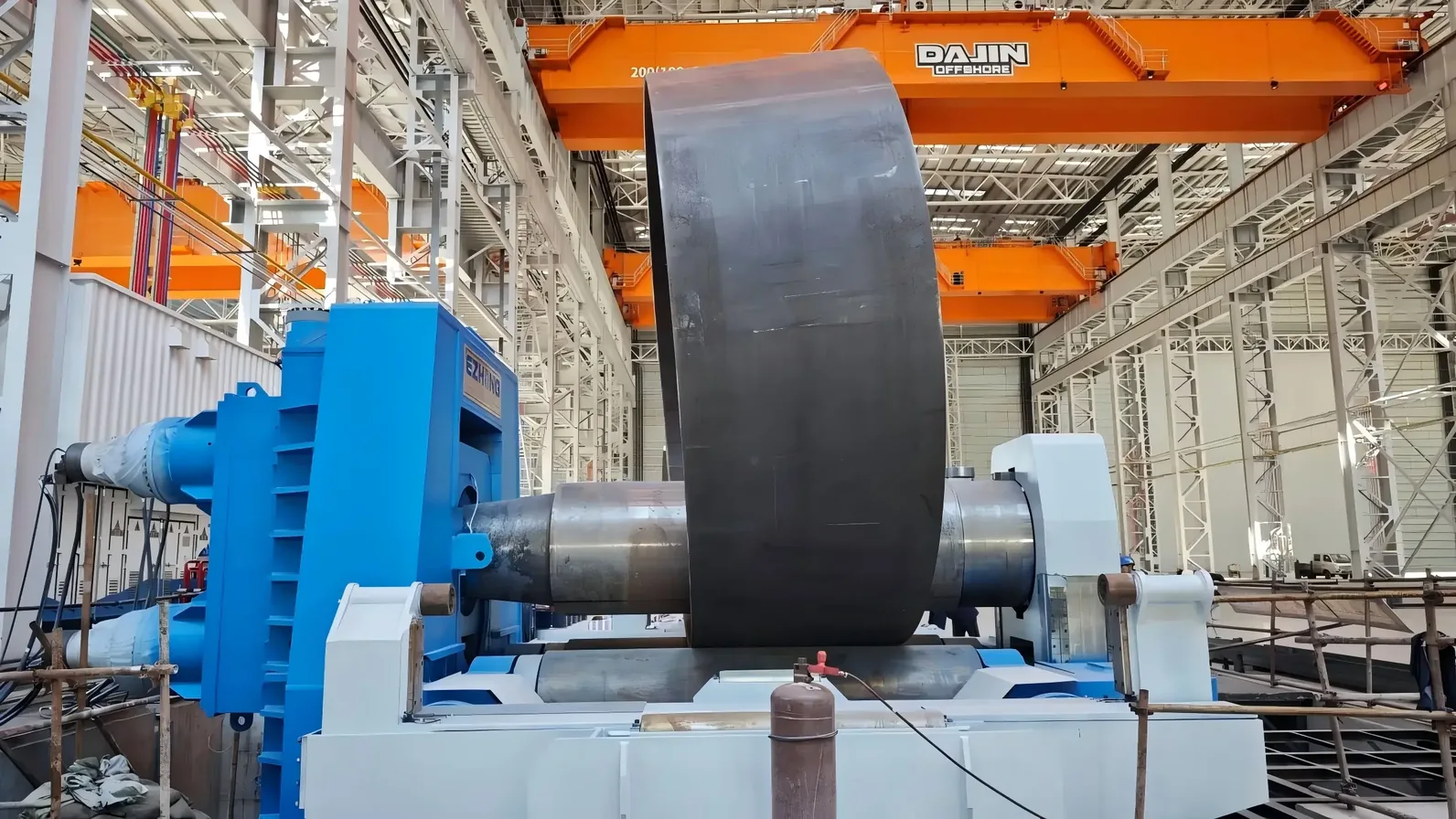 Industrial plate roller machine bending thick metal plate in manufacturing facility
Plate rollers serve seven primary industrial applications, each with distinct tolerance and capacity requirements.
Boilers, reactors, and storage tanks require cylindrical shells rolled to ASME Section VIII tolerances—typically ±0.5% on diameter. A pressure vessel rolling machine must maintain consistent wall thickness across the entire circumference, as post-weld stress relieving cannot correct diameter variations. Fabricators working with SA-516 Grade 70 or P355GH steel typically specify 4-roll machines for shells exceeding 80mm thickness, where pre-bending becomes critical to eliminate flat spots.
Each wind tower requires 3-4 rolled sections with diameters ranging from 2.5m (top) to 4.5m (base). The challenge isn't just diameter accuracy—it's maintaining cylindrical tolerance across 30-40mm wall thickness while processing 12-meter plate lengths. Wind tower manufacturing facilities using CNC plate rollers reduce cycle time by 40% compared to manual positioning, as the machine automatically compensates for material springback based on yield strength data.
Ship hulls demand compound curves that single-radius rolling cannot produce. Ship plate rolling machines handle plates up to 150mm thick for icebreakers and naval vessels, often incorporating variable-radius rolling where top roller position changes continuously along the plate length. Hull panel rolling differs fundamentally from pipe work—you're creating developable surfaces, not closed cylinders.
The number and arrangement of rollers determines what a machine can and cannot form effectively.
| Configuration | Pre-Bending Required | Minimum Diameter | Best Application |
|---|---|---|---|
| 3-Roll Symmetrical | Yes (separate press) | 1.5× top roller diameter | High-volume pipe, simple cylinders |
| 3-Roll Asymmetrical | No | 1.2× top roller diameter | Wind towers, pressure vessels |
| 4-Roll | No | Equal to top roller diameter | Thick plate (>60mm), precision work |
| Variable Geometry | No | 0.8× top roller diameter | Ship hulls, cone sections |
Most fabricators face this choice when replacing aging equipment. 3-roll machines dominate in shops rolling the same diameter repeatedly—the setup is faster once tooling is dialed in. But 4-roll machines eliminate pre-bending, which cuts handling time by 25-30% on mixed-production schedules. For a detailed breakdown, see our 3-roll vs 4-roll comparison guide.
The hidden cost in 3-roll work is scrap. Every cylinder needs both plate ends pre-bent, leaving 150-300mm of flat edge that must be cut off. On a $15,000 plate, that's $800-1,500 in material waste per piece.
Plate rolling works through incremental plastic deformation. As the plate passes between rollers, the outer surface experiences tension while the inner surface compresses. The neutral axis—where stress equals zero—shifts toward the inner surface as radius decreases. This matters because:
CNC systems compensate for these factors automatically, but manual machines require operator expertise to predict final diameter from roller positions.
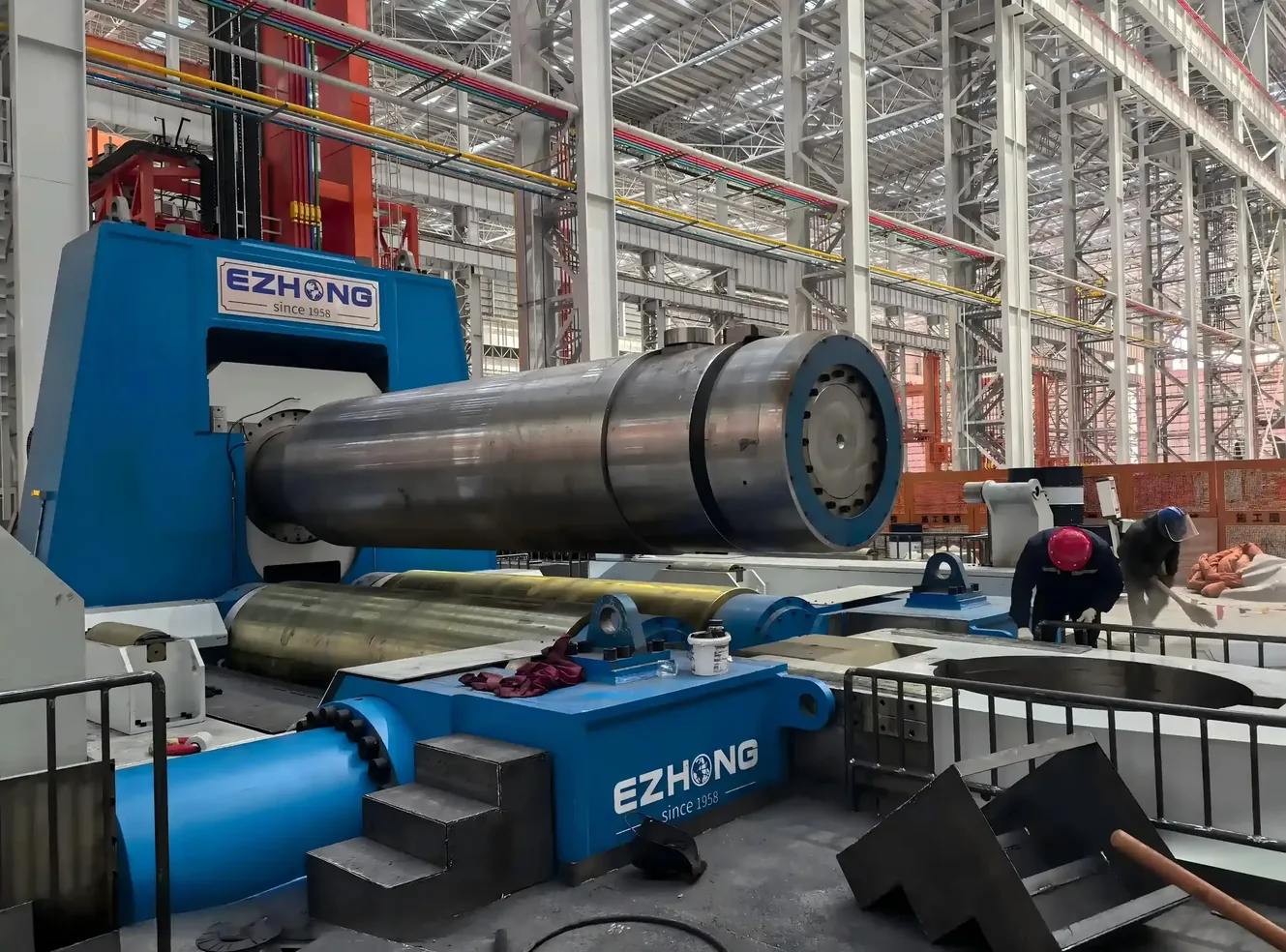 Rolled steel pipe cylinders in manufacturing production line
Steel pipe manufacturing operates at completely different tolerances than structural work. API 5L pipe specifications allow only 1% ovality, measured as (Dmax - Dmin) / Davg. Achieving this requires machines with individual hydraulic control on each roller, as even 0.2mm deflection in the top roller translates to 1.5mm diameter variation across a 6-meter cylinder.
Field-erected tanks present a unique challenge: rolled sections must nest during transport but achieve perfect roundness after assembly. Tank manufacturing solutions often use stepped rolling—the plate makes multiple passes with decreasing roller gap, preventing work-hardening that would crack the material during final forming.
Curved facades and arched roof structures demand aesthetic perfection, not just structural adequacy. Steel structure manufacturing for architectural applications typically specifies surface finish requirements (Ra ≤ 6.3μm) that standard rolling cannot achieve without post-rolling machining.
Not all plate rollers can handle all materials. Here's what capacity ratings actually mean:
| Material Category | Yield Strength (MPa) | Required Rolling Force vs Mild Steel | Key Limitation |
|---|---|---|---|
| Mild Steel (A36, S235) | 250 | 1.0× baseline | None—reference material |
| High Strength (S355, A572) | 355-460 | 1.4-1.8× | Springback compensation |
| Armor Plate (AR400, HARDOX) | 960-1200 | 3.5-4.2× | Roller surface hardness |
| Stainless (304, 316L) | 205-290 | 1.2× | Surface finish protection |
| Clad/Composite | Varies | 1.3-2.0× | Differential springback in layers |
Machine tonnage ratings assume mild steel. That "4000-ton" machine delivers only 1000 tons of effective force on HARDOX 500—a fact that surprises fabricators who discover their new equipment can't handle the work they bought it for.
Wind tower base sections and reducer fittings require controlled diameter change along plate length. This means the machine must vary top roller position continuously while maintaining contact pressure. Only CNC servo-controlled systems can execute this automatically—manual machines require multiple setups and produce visible step transitions.
Architectural and marine applications increasingly demand non-circular cross-sections. Creating these shapes requires machines with independently controlled side rollers, allowing asymmetric bending that traditional machines physically cannot produce.
When evaluating equipment, understand what specifications actually control:
A machine rated for "50mm × 3000mm" cannot necessarily roll 50mm plate across the full 3000mm width—that combination may exceed deflection limits depending on diameter and material grade.
Rolling a single cylinder involves five distinct operations:
CNC machines reduce steps 1 and 2 by 60-70% through automated positioning, while experienced operators cut step 3 time by predicting optimal pass sequences.
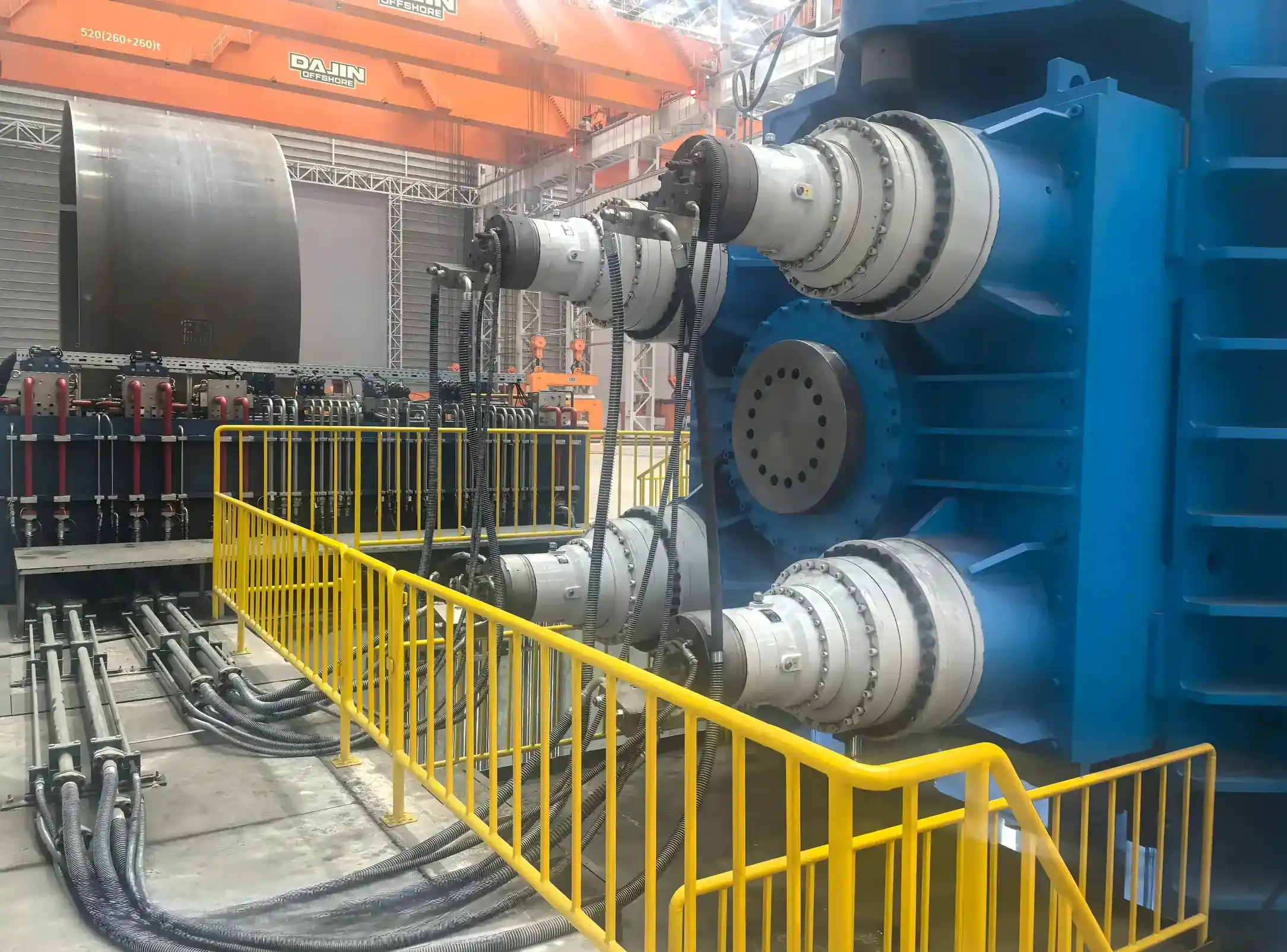 Maintenance technician inspecting plate roller machine rollers and hydraulic system
Roller surface condition directly affects output quality. Even 0.1mm of wear creates visible marks on finished cylinders. Shops processing abrasive materials (weathering steel, scaled plate) typically resurface rollers every 18-24 months. Hydraulic seal failure—common after 8-10 years—causes pressure loss that manifests as inconsistent diameter across the cylinder length.
A standard 4-roll plate rolling machine capable of handling 40mm × 3000mm plates costs $300,000-450,000. Payback calculation depends on:
Fabricators running mixed production typically achieve 18-24 month payback. High-volume shops producing standardized items (pipe mills, tank farms) see 10-14 month returns.
What's the difference between a plate roller and a section bender?
Plate rollers form flat metal sheet into curved shapes, while section benders curve structural profiles (I-beams, channels, angles) that already have defined cross-sections. The two machines use completely different mechanics—profile bending applies moment about the neutral axis rather than through-thickness deformation.
Can a plate roller straighten warped plates?
No. Plate rollers create uniform curvature; they cannot correct localized distortion. Warped plates need a plate leveling machine before rolling. Some fabricators mistakenly try to "roll out" warp, which only produces cylinders with helical twist.
How thick can plate rollers handle?
Production machines range from 6mm up to 300mm plate thickness. Capacity depends on material strength, required diameter, and machine design. The limitation isn't crushing force—it's the mechanical stress in the roller shaft and bearings during bending.
What industries use plate rollers most?
Energy sector (wind towers, pressure vessels), shipbuilding, structural steel fabrication, pipe manufacturing, and tank production represent 85% of industrial plate rolling applications. Each sector has distinct tolerance and capacity requirements.
Do plate rollers work with aluminum or exotic alloys?
Yes, but capacity derating varies by alloy. Titanium requires 2.5-3× the force of mild steel due to work-hardening. Aluminum's lower yield strength seems easier, but its tendency to gall requires special roller surface treatments. Always verify machine capability against actual material properties, not just thickness.
Plate rollers transform flat metal into the cylindrical and curved components that heavy industry depends on—from 4-meter wind tower sections to pressure vessel shells meeting ASME tolerances. The choice between 3-roll and 4-roll configurations, machine capacity, and CNC control level directly impacts production efficiency, material waste, and dimensional accuracy. Understanding the relationship between material properties, required forming radius, and machine capability prevents costly mismatches between shop equipment and actual production demands.
For fabricators evaluating equipment, focus on three factors: the material strength range you'll actually process (not just thickness), your diameter variety across production runs, and whether pre-bending elimination justifies 4-roll investment. These decisions determine throughput, scrap rates, and operator efficiency far more than headline tonnage specifications.
The plate rolling equipment that fits your application depends on production volume, material grades, and tolerance requirements specific to your end market—whether that's shipbuilding, pressure vessel work, or steel pipe manufacturing.